
That has been the general sentiment of Americans since at least 1774 when King George instigated the Intolerable Acts. It is extremely important, however, for us to realize that not every king of England was like George III. The reason is not historical accuracy. Rather, I am saying it is important to our faith to realize that not all kings were as intolerable as George. Let me explain why.
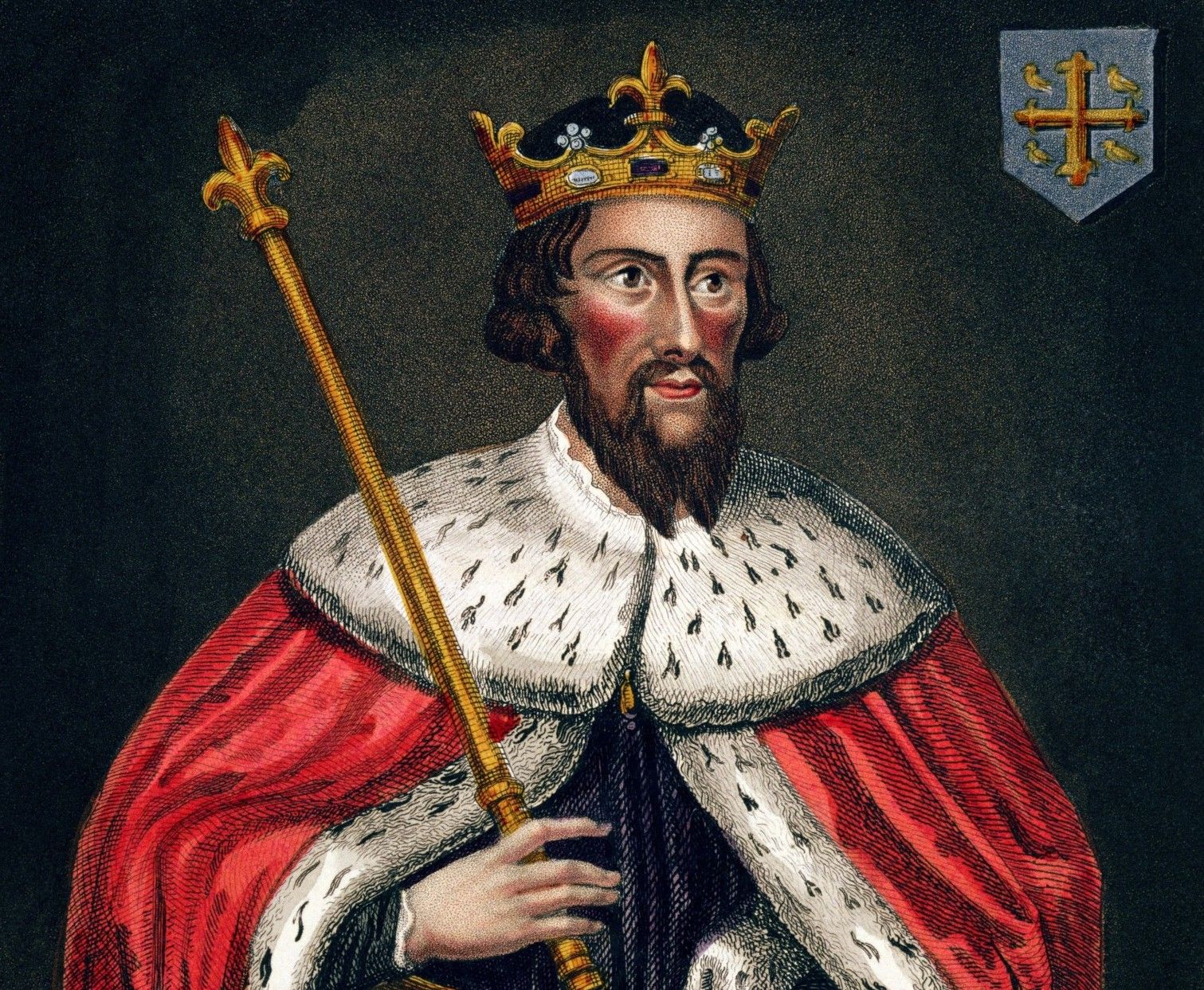
My new favorite king in history is Alfred the Great, usually considered the first king of England (pictured above). He reigned over the kingdom of Wessex (now southern England) from 871-866, about 900 years before George III was king. Later he reigned as “King of the Anglo-Saxons” (886-889), indicating a broader kingship.
There is line written about Alfred in the ancient the Anglo-Saxon chronicle that is worth pondering. It says King Alfred rode out from his stronghold and was met by the people of the nearby shires (counties) “and they rejoiced to see him.” That may be surprising. They actually rejoiced at the sight of their king! Our distaste for having anyone tell us what to do makes it difficult for us to see how anyone could rejoice over a king, but if we understand the background to that statement in the chronicle, it will give us a new and better perspective.
and they rejoiced to see him.
Since 789, Vikings from Scandinavia had been raiding the several Anglo-Saxon kingdoms that made up what we now call England. They began with single raids, moved on to remaining in the land for a season, and finally began to establish actual long term settlements there. Though the Vikings were sometimes farmers, traders, and craftsmen, they were also ruthless pillagers, looters, traffickers, rapists and murders. Can you imagine living in a time and place where at any moment a violent hoard might suddenly appear to steal, attack and destroy you, your family, and your town?
The Anglo-Saxon chronicle tells us that in 865 the “Great Heathen Army” of Vikings arrived from Scandinavia and began systematically taking over all of England. Some of the Anglo-Saxon kings temporarily held out and prolonged their lives by fraternizing with the enemy, giving them horses and supplies, only to be destroyed by them later on. By January of 878 the Vikings had conquered all the kingdoms of England except Wessex, where Alfred ruled. Even Wessex was in trouble. A powerful Viking warlord named Guthrum had driven Alfred back to the Southwest corner of his land. There he was holed up in an island fort, surrounded by marshes. This was the low point of the entire history of Anglo-Saxon England. Yet with just a few remaining troops, Alfred persevered in the fight to repel the ruthless raiders. He avoided major battles for a time and instead relied on guerilla warfare. He also sent out scouts and spies and gain intel and to grow his army.
The way you feel about having a king has everything to do with your circumstances.
Just a few months later, in May of 878, king Alfred rode out from his island fort and into the surrounding counties of Wessex. The people from those shires met him at a designated rallying point. It was then that they “rejoiced to see him.” The way you feel about having a king has everything to do with your circumstances.
I contend that our aversion to kings is due to our persistent focus on the “intolerable act” of someone in authority telling us what to do coupled with our lack of conscious awareness of the threat presented by the Tyrant. In an ironic parallel with our nation’s forefathers, we, too, have rebelled against our Rightful King, declared our independence and sought to establish our own kingdoms. All the while we are oblivious to the powerful “Guthrum” who is still raiding, trafficking, and destroying our land and people. We have grown dull to the fact that our Enemy has sent warlords to steal, kill, and destroy. We are theoretically aware of him and his evil intent, but his deceptive ways have dulled our sense of threat and danger and consequently we are scarcely aware of our need for a King to deliver us from the corruption in the world. Like some of the kings of England, we, too, have sometimes even fraternized with the enemy and invited him into our lives, families and homes. We see the destruction around us and seem to know he is the cause of it all, but we lack any real urgency for deliverance. In short, I believe the intolerable acts of George III have led to an incessant focus on not wanting anyone to have authority over us and blinded us to our own desperate need for a King to deliver us. So we live, and die, by the notion that we don’t need no stinkin’ king.
I believe the intolerable acts of George III have led to an incessant focus on not wanting anyone to have authority over us and blinded us to our own desperate need for a King to deliver us.
But we are wrong. I am certain of that because God’s solution to the devastation the Tyrant is causing in our world was to send us a King—one more powerful and righteous than the Evil One. It is paramount for us to learn that this King came not only to forgive us for the times we have fraternized with the enemy king but also to expose him, limit his power, and deliver us from his clutches.
To finish the story of Alfred, after his people rejoiced to see him, he called a levy to increase the size of his army even more. He then led his people to a decisive victory over Guthrum, chasing him back into one of his fortresses. Next Alfred laid siege to that fort and starved the Vikings into submission. Guthrum was compelled to leave Wessex and peace was established in Alfred’s kingdom.
Alfred still faced skirmishes from other Vikings in the following years, but there were no large-scale battles. He soon reoccupied London and restyled himself with the more encompassing tile of King of the Anglo-Saxons. Over the course of his reign, he made his land and people safer by creating a standing army (instead of just calling for militia troops when needed), establishing fortified towns, improving the road network, and creating a navy. He also improved education, the legal system, and people’s quality of life. Good kings do a lot more than show mercy to their subjects who do wrong. Alfred was known as a learned, merciful, gracious and levelheaded king. He is the only native born English king to be called “the Great.” And he’s my new favorite because he exemplifies and also helps me understand more of the breadth of what true kingship entails.
Good kings do a lot more than show mercy to their subjects who do wrong.
The King of Kings and Lord of Lords is Greater than Alfred, of course. Our King, too, is merciful and gracious. But, again, we must learn that there is more to his kingship than that. Isaiah gives us a helpful, bullet point summary of what our King does is, “The Lord is our judge, the Lord is our lawgiver, the Lord is our King, he will save us (Isaiah 33:22). We not only depend on him for mercy but much more. We owe him our total allegiance and service.
Perhaps the perspective we gain on kingship from Alfred the Great gives new meaning to these non-inspired, yet inspiring lines:
Joy to the world; the Lord is come;
Let Earth receive her King;
Let ev’ry heart prepare him room,
And heav’n and nature sing.
I now understand more fully the reason for singing and joy upon the coming of a Great Monarch. The question each of us must answer is, Do I have room in my heart to genuinely receive the King?
 Empowering Subjects