
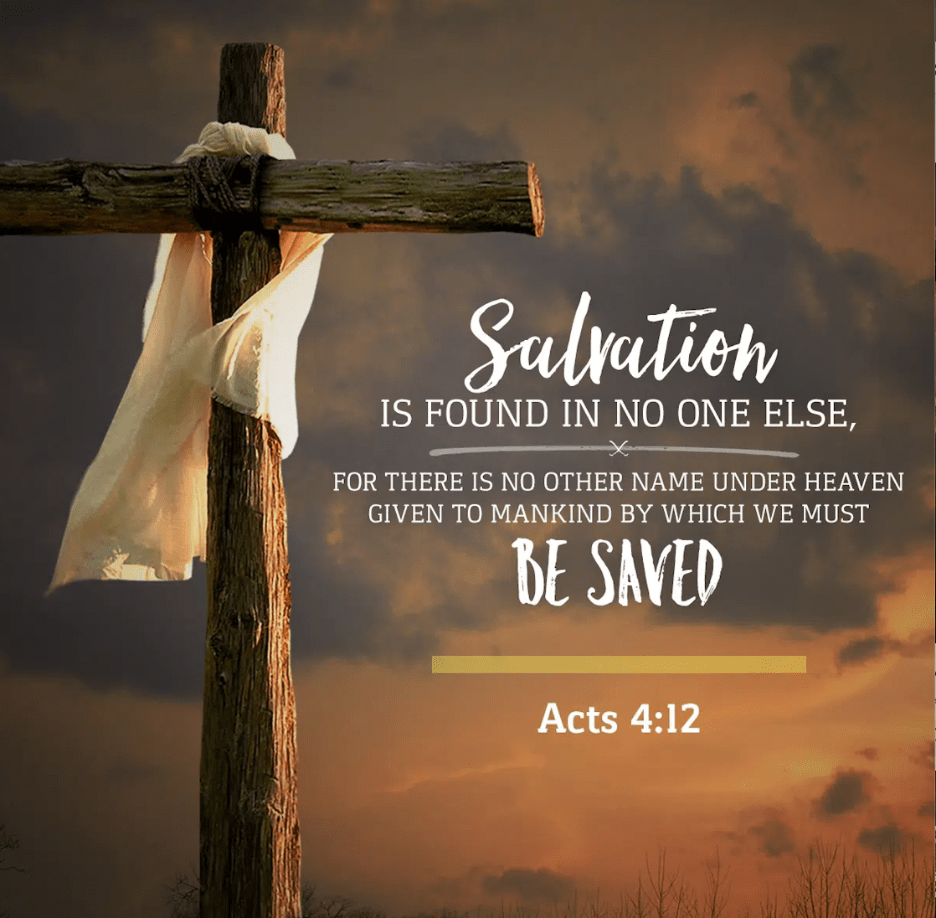
We all know the basic idea of salvation, but having a broader and clearer understanding of it will help us personally and also prepare us to better tell the good news to others. We can’t cover everything here, so I’ll limit myself to five key aspects of salvation specifically mentioned in the seven recorded evangelistic messages in Acts. These aspects of salvation can be remembered by an acrostic based on the word SAVED.
S-ins forgiven (Acts 2:38; 3:19; 5:31; 10:43; 13:38). This aspect of the significance of Jesus being the Christ is the one most commonly mentioned in the gospel proclamations in Acts, and it is wonderful! It is true that we must guard against the danger of thinking we can earn forgiveness by our good works. It is also true that we must not let our concern about salvation by works cause us to downplay repentance or the need for changes in how we live (cf. John 8:11). Jesus died for our sins to be sure (1 Corinthians 15:3), but have you ever noticed that he also died in order to turn us away from sin (carefully read 2 Corinthians 5:14-15; Titus 2:14; 1 Peter 2:24)? Similarly, Peter preached salvation in Acts 2, but we haven’t always noticed the specific danger he said we could be saved from It was not condemnation nor hell (though this is true) but rather “this crooked generation” (Acts 2:40). Forgiveness is central to salvation and is fantastic. But we must not limit salvation to this.
A Royal Counselor. By this I don’t mean we can now see a therapist. I mean we have Someone who gives wise counsel for our lives (cf. Isaiah 9:6). In former times, a person could stand in line all day and bring his or her problem before their king for a ruling or wisdom. But in Christ we have constant access to our King’s royal counsel. The titles used to describe him in the evangelistic messages (Christ, Lord, Prince, Son, Author of Life, Judge, etc.) show he has the right and authority to instruct us on how to live. But in one of the Acts messages Peter specifically mentions that he does this and that we need to listen to him (Acts 3:22-23, 26). Salvation includes not only forgiveness when we fail but guidance about how to live our lives in the first place.
If a person does not have the Holy Spirit,
they are not a Christian (Romans 8:9)
V-ery presence and power of God (i.e., the Holy Spirit, Acts 2:38-39; 10:44-48). Paul stated bluntly that if a person does not have the Holy Spirit, they are not a Christian (Romans 8:9; cf. Acts 8:14-17; 19:1-6). This is not just doctrine; it is also practical. The Spirit is God’s new and better way of helping his people obey him (Ezekiel 36:27; Romans 8:1-4; 2 Corinthians 3:18; Galatians 5:16-18). These truths show that the Holy Spirit is an indispensable part of our salvation. Would you say your Christian life and service are more a matter of “the old way of the written code” or “the new way of the Spirit” (Romans 7:6)? (For more on this, click here and scroll down to the article on The New Way of the Spirit.)
E-veryone is invited. Though the gospel was “for the Jew first,” it was “also for the Greek” (Romans 1:16). It may seem obvious to us today that it is for everyone, but this truth is stated stated frequently in the evangelistic messages (Acts 2:39; 3:25; 10:34-35, 42-43, 44-48; 13:39, cf. v. 46; 17:30-31). The inclusion of the Gentiles is a major emphasis in the book of Acts (see especially chs. 10-11). This universal invitation to salvation matches the announcement of the angel who told the news that a Savior, Christ the Lord, had been born. He said this good news of great joy he brought was “for allthe people” (Luke 2:10-11). Don’t miss that the ones he was sent to tell this message to were simple, sometimes ignored shepherds.
D-ay of his return. The Scriptures teach that salvation is past (Ephesians 2:5, 8), present (1 Corinthians 1:18; 15:2), and future (Matthew 24:13; Acts 15:11). When Christ came, he brought salvation, and one day he will return to bring it to complete fulfillment (1 Peter 1:3-5). His return will be both a Day of Reckoning (Acts 10:42; 17:31; cf. Romans 2:16) and a Day of Restoration (Acts 3:21; cf. Matthew 19:28). In this way, one day, everything will be made right.
We must stop giving the impression that salvation is
only about going to heaven instead of hell.
Much could be said about these aspects of salvation, but I’ll mention just one crucial implication: we must stop giving the impression that salvation is only about going to heaven instead of hell. As wonderful as forgiveness and heaven are, salvation entails much more. A careful reading will show that the evangelistic messages in Acts don’t even mention heaven and hell, though they are real and true. Yet if we focus only on helping people go to heaven at the end of time, we may unwittingly influence them toward laziness and mediocrity in their lives in the here and now. The various other aspects of salvation told to non-Christians in Acts show that God’s provision and intention is to save us not only from the condemnation of sin but also from its power and practice in our lives. Though we will not be fully delivered from the sway of sin until Christ returns, he has given us both instructions and resources to help us be progressively free from sin and increasingly useful to him during our lifetimes. Both we and others need to grasp multiple aspects of God’s great salvation.
 Empowering Subjects